

With the start of a new spring semester, students are pressured with academic deadlines from exams, projects, higher expectations, and searching for internships. This results in forcing students to balance schoolwork with responsibilities outside the school. The amount of work results in overwhelming stress, less sleep, mental health issues, and after-school commitments.
For many students, the spring term brings additional challenges, often leaving them feeling overwhelmed.
“I don’t think they understand the amount of stress students are under, because they give a lot of homework that sometimes doesn’t even help students, and many teachers give tests on the same days, causing students to stress more than study,” said Yaritza Villafuerte, a junior. “On top of that, teachers have very strict deadlines and don’t accept late work, causing students to rush through their work and not give their best effort.”
She added that although work may feel manageable now, pressure will start to compile. “I think currently I’m doing well, but later it’ll become messier because… the mix of assessments and work is going to pile on and be hard to manage,” Villafuerte said.
Similarly, senior Caesar Morales explained that while stress is real, the way teachers respond can be very different.
“I think teachers do understand the amount of stress, but it depends on the teacher whether or not they care. There are some teachers who would make the end of the school year less taxing than other parts of the class because they know it can get stressful. But other teachers know the stress, yet either they don’t believe it’s detrimental enough to ease off or just think their class is more important,” Morales said.
He also emphasized the rising stakes of the spring term.
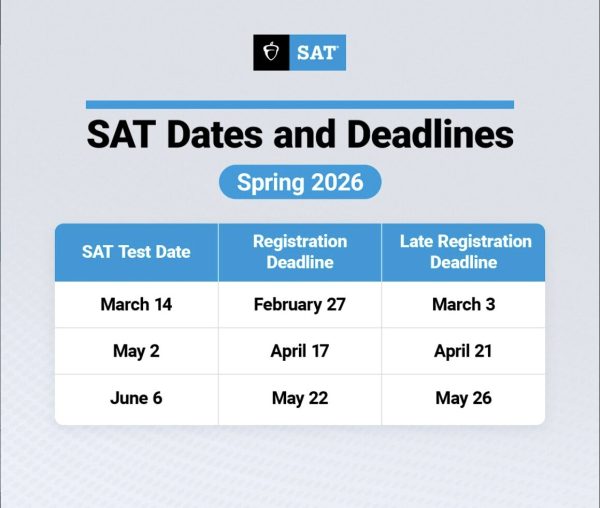
“Spring feels a little more stressful than any other part of the year because students are starting to get a lot bigger and more important assignments. Whether it’s final projects, AP exams, Regents, SAT’s, or anything else, students have a lot of pressure put on them,” Morales said.
He added that the consequences feel more serious as the year comes to an end.
“Students are more often than not stressing about what could happen after their exams and projects. Sometimes these grades determine whether or not a student passes their class, which puts a lot of pressure to do well. At this point in the year, there isn’t really a chance to fix anything if it goes wrong,” Morales said.
While students describe feeling pressure, teachers explain the different systems placed in our school to help manage assignments and expectations.
From a teacher’s standpoint, Mr. Aguilar, an English teacher, described both the pressure students face and the systems in place to support them.
“The amount of homework we all agree on as a team is the same for all of the departments. As for preparation for the students, there are progress reports and parent outreach for kids who are struggling, and in addition, throughout the middle of the year, some kids get transferred to other classes. This school does have a lot of support with guidance and additional tutoring,” Mr. Aguilar said.
He added that the Spring term can feel like a reflection. “Some students, if they didn’t do well in the first half of the year, this is like a now or never idea because they don’t want to go to summer school, so that could be stressing for students who don’t want to go to summer school, Second half of the years is like a fork in the road of reflection,” Aguilar said.
Similarly, Ms. Haritos, a math teacher, explained that student stress often depends on course level and academic track.
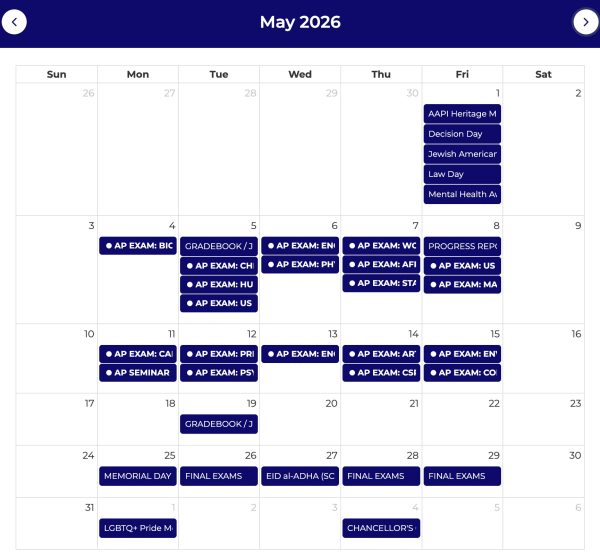
“I think it depends on the grade the student is in and the courses they are taking. Seniors who are mostly done with Regents and don’t have AP classes are not feeling stressed. Any student in an AP class feels the pressure immediately since the exams are in early May. Students in Regents classes are also going to stress as the term ends. There is a ton of pressure to prep for exams and perform as the end of the year approaches,” Haritos said.
Her perspective depicts how academic pressure is not experienced equally, with advanced courses forcing more consistent work on students.
“More rigorous, high-stakes classes could require more homework and prep time at home. In my AP classes, the homework stays pretty consistent all year, with material that is either there to reinforce the topic or designed to have students think and struggle so as to learn from that struggle the next day when we go over it,” Haritos said.
Regarding these differences, Haritos emphasized that departments aim to keep expectations fair and balanced across classes.
“As a department, we try to keep the numbers in line with the other teachers that teach the same course, and we try to keep it fair. School-wide, there are some requirements as to how many assignments of any type we should give,” Haritos added.
While teachers are fixed on structure and expectations, guidance counselors are there to see the direct emotional impact of these pressures on students. Ms. Hidalgo, a guidance counselor, explained that the spring season often brings increased concern about graduation, grades, and attendance.
“In the springtime, students usually come to my office to check in about their transcript, about their schedules, making sure that everything is seamlessly happening and that they are graduating in time, specifically seniors,” Ms. Hidalgo said.
“Some of them feel stressed out if they have made up a January Regents and they want to know the grade to make sure that they’re on track. Sometimes, attendance, especially in the wintertime, students are struggling to get to school… It’s hard to get here, to then sit all day in a classroom and be open-minded to learning,” Hidalgo said.
Despite these challenges, Ms. Hidalgo brings up the importance of support and communication between students and teachers.
“Teachers really go out of their way to support the students to make sure that it’s not a barrier for them. It’s more like we’re going to do this together, and I don’t want it to be a huge stress around you. So, I just think that it’s not a heavy concern of mine as long as the teacher and the student are working together hand in hand and there’s open communication,” Hidalgo said.
Hidalgo encouraged students to take a step back from the pressure and focus on the aspects of their life they have control over.
“Just letting them know that they are not alone… when feeling overwhelmed, it can feel like the end of the world,” Hidalgo said. “But if you just take it one task at a time and ask for help when you need it, it really helps. There’s always support here, and we’ll get through it together.”