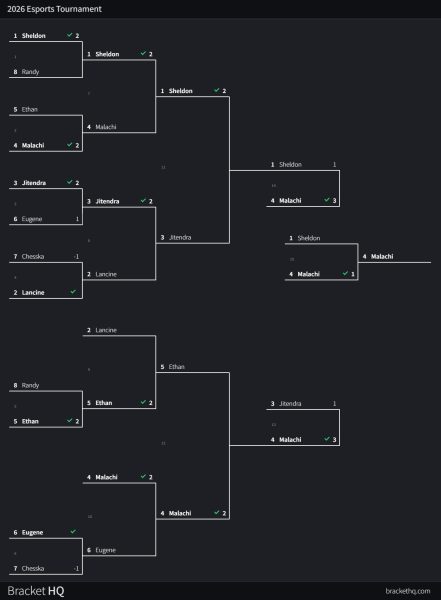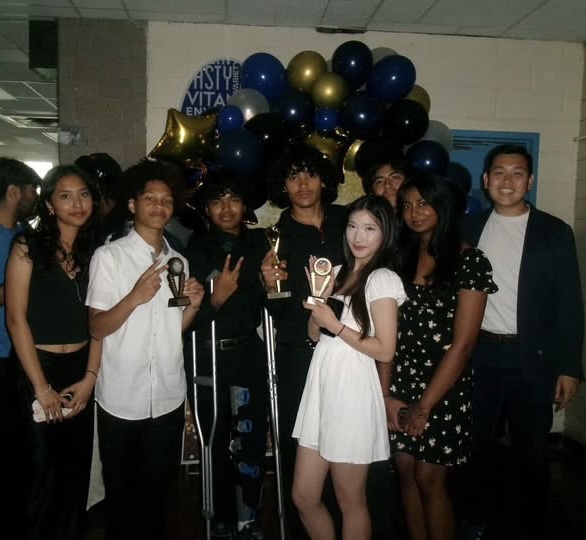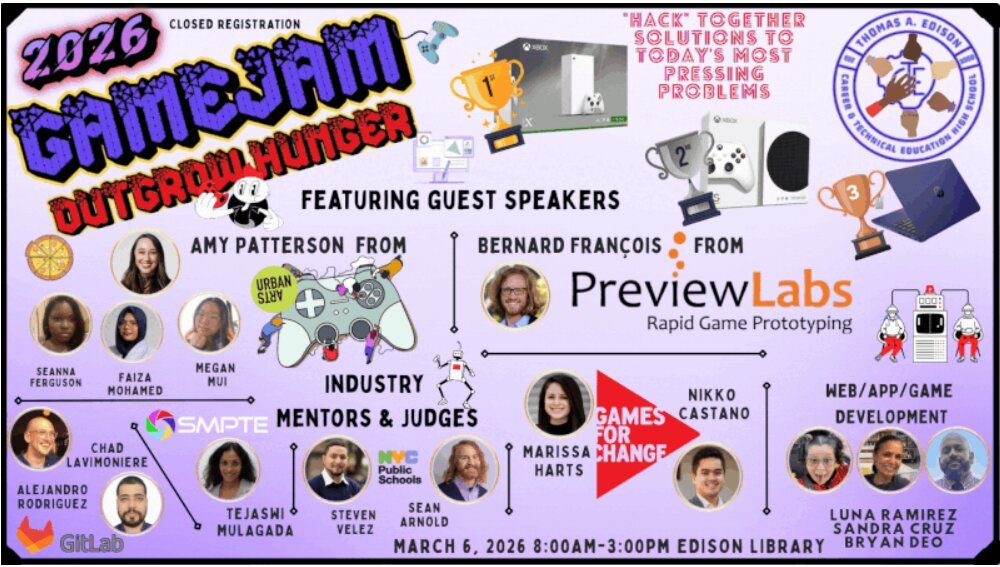

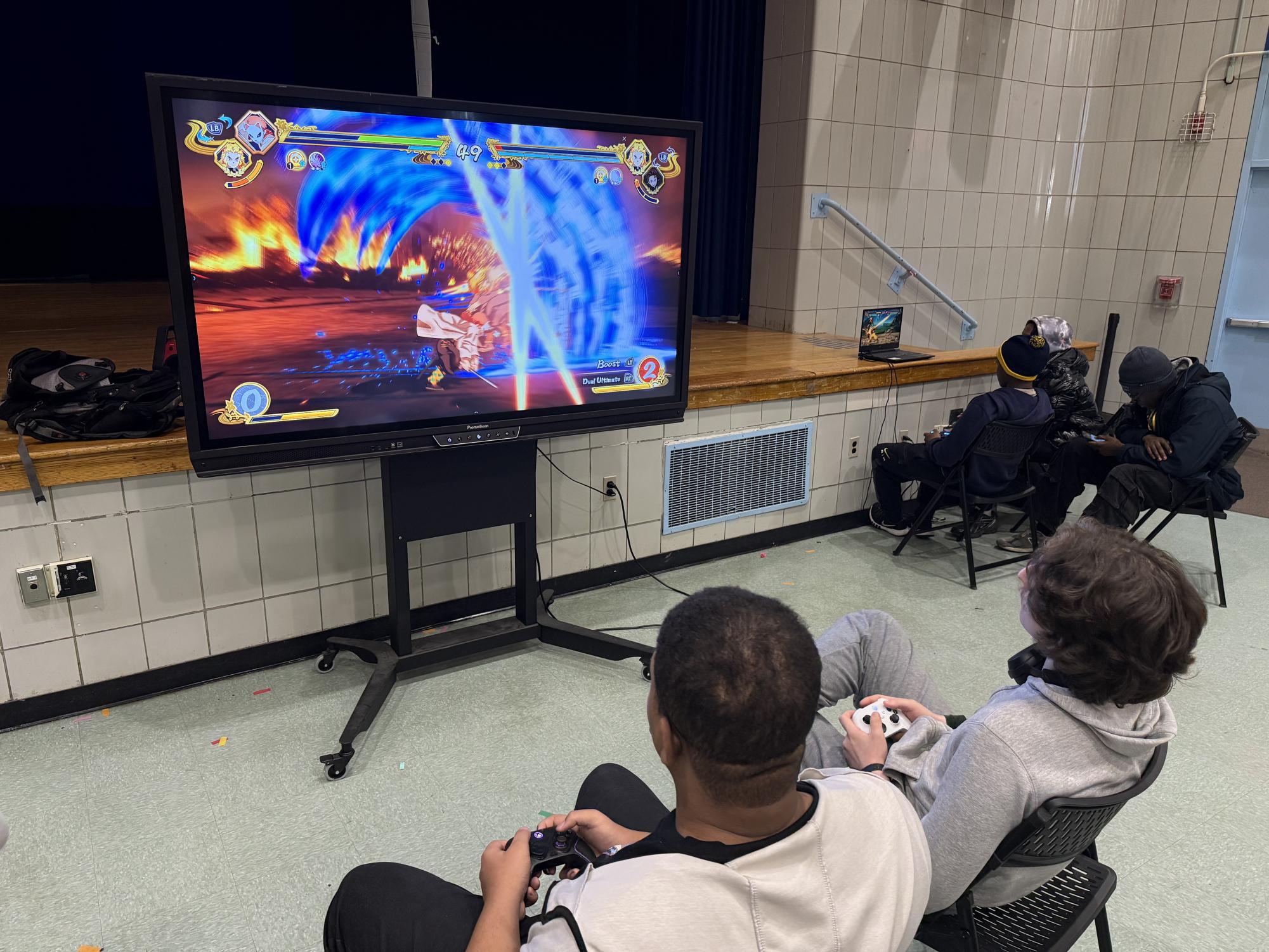
The esports club at Edison held its second annual esports competition in the school auditorium the week of March 9th. Throughout this competition, students competed against each other for a cash prize.
For the many students who were able to make the event, through camaraderie and friendly competition, esports students built a stronger sense of community beyond the club and into the wider school community.
The competition featured eight competitors and dozens of spectators, bringing together the club of members, alike. The competition lasted a total of eight hours, between both Monday and Friday after-school, including multiple rounds.
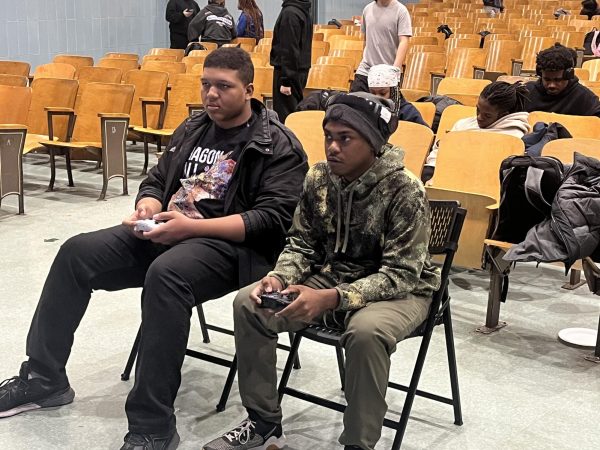
As energy filled the auditorium, students alternated between shouting call-outs and cheering their friends, while competitors concentrated and celebrated as each match unfolded. The chosen game for the event was “Demon Slayer: Kimetsu no Yaiba – The Hinokami Chronicles 2,” a fast paced anime-fighting game where you can battle others with strategic combos and special abilities.
The esports club was founded, with alumni, by history teacher, Mr. Anderson. The club first gained traction after students in Edison’s anime club started bringing and playing on their Nintendo 3DS Consoles during meetings.
“At one point, about ten years ago, we were meeting twice a week—one day for anime and one day for games. Eventually, we started hosting small tournaments, including games like Project M, which is a modded version of Smash Bros, and later Dragon Ball FighterZ. When the Nintendo Switch came out, gaming became even more central to the club. Around that time, a colleague attended a workshop and learned about a national esports league. He suggested we separate gaming into its own club so students could compete,” Mr. Anderson said.
The club continued to progress and adapt to the needs and interests of the students.
“For a few years, students participated in online competitions against other schools, mostly in Smash Bros. But over time, participation dropped—it’s competitive and can be stressful. That’s how the esports program evolved into what it is today,” Mr. Anderson said.
During the time when the students were involved in more formal competition, “students would take on leadership roles—like captains or coaches—and actively help each other improve. You still see that today in smaller ways,” Mr. Anderson said.
These connections also support the social connection of most of these students to mentorship and social connection.
“I’ve especially noticed that students who might struggle socially, including those with disabilities, benefit from having a consistent space where they can connect with others. By coming regularly, they start forming friendships,” Mr. Anderson said.
Through the unification of the esports club for their second annual competition, competitors like Malachi Turner, an Edison senior, prepared long before stepping into the spotlight.
“When we know what game the tournament is going to be, we spend weeks practicing it,” Malachi Turner said. He even brought his Xbox from home in order to broadcast the competition’s game.
Leading up to the event however, players dedicated their weekly meetings to mastering game mechanics and learning from each other through skillful training.
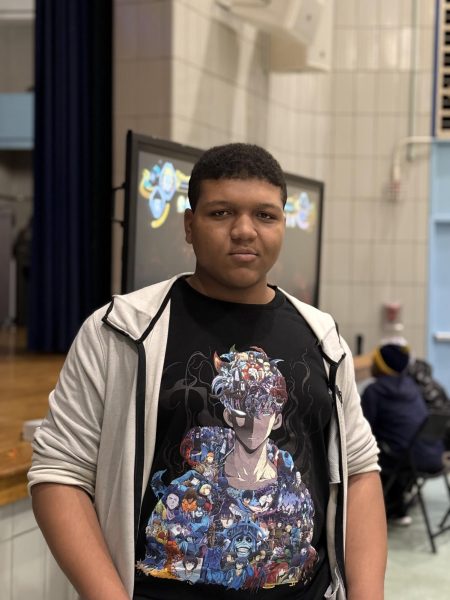
Although this was Malachi’s first time formally competing in a tournament, he had spent years observing from the sidelines, waiting for the right moment to step in. Now, playing a game he was familiar with, he saw it as an opportunity to finally participate.
Beyond his kindled flame for esports , Malachi highlighted the ways the club has shaped his social experience throughout high school, “It helped me become more social,” he explained. “Back in middle school, I was pretty distant, but in high school I had to start opening up more,” Malachi Turner said.
Through both the spontaneous interaction of students who have the same hobbies, he found meaningful connections in places he wouldn’t have made just through classes. “You can bring any console, any game, and there’s a good chance someone will relate to it,” Malachi Turner added, emphasizing the inclusive and flexible nature of the club.
Somar Williams, a sophomore and member of the esports club, described the club as a meaningful social outlet. Although he believed clubs were a “waste of time,” in his freshman year, he decided to join esports because of his interest in video games, returning for a second year to meet other passionate individuals across school. “In esports , you meet people who are like you—or even if they’re not, you still share interests,” Somar Williams said. Through connection and kinship, he describes the club as “a fun experience,” adding that “more people should try it.”
Long after the final matches ended from the competition, the impact of the esports club continued beyond the tournament brackets. The club fosters a unified space where students share the interests in video games, where students like Malachi and Somar, found a greater sense of belonging and camaraderie.