

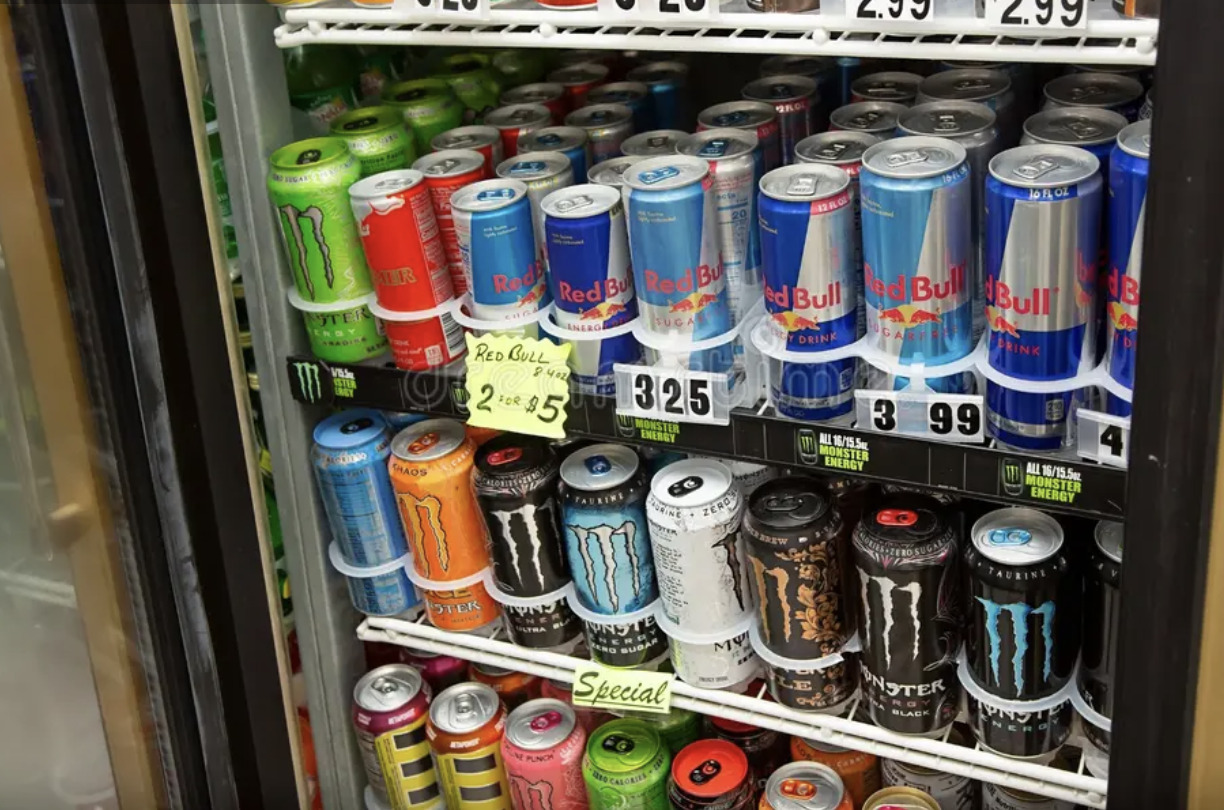
Whenever exam season rolls around, you often find yourself getting your go to drink. For many, it may be coffee, sparkling water, maybe even tea—but for others, it’s energy drinks. Energy drinks are becoming increasingly common, whether driven by taste, trends or tiredness, appearing everywhere.
But how common are energy drinks among teens?
Edison students claim that it is common for people our age to drink energy drinks.
“Since we are going through a lot of stress in school, balancing work and extracurriculars,” Kassandra Done, a senior explained, “I drink about 3 Celsius a week.”
Yoselin Cortes had similar sentiments, “In March, I had about 3 energy drinks a week since I was pulling a lot of all nighters doing work. It was a stressful month,” she said.
Another student shared that though it is common in a high school setting, they believe energy drinks may be more common in a college setting.
“I don’t drink them, I rather drink coffee or tea to stay awake and recharge,” Deeya Kar said, “Some of my friends drink energy drinks but not many of them recommend it because they just do it for quick boosts of energy.”
Despite its accessibility and energy boost, the consumption of caffeine, especially in the form of energy drinks is greatly discouraged by many organizations due to the high amount of caffeine, added sugars, and other substances.
“I would consider completely stopping my consumption of energy because of the strain it may put on the body,” Luke Ramalogan, a senior, continued, “I’ve been exposed to ideas that drinks like this can give a temporary boost in energy, but when consumed without exercise, it could result in unnecessary pressure on the body.”
Students may rely on caffeine to stay awake, but that often comes at a cost. Experts suggest that excessive caffeine intake can disrupt sleep cycles, making it harder for students to stay focused and perform well academically. Some students wished they knew about the negative effects of caffeine earlier, while others continue to consume energy drinks despite being aware of the risks. Beyond energy drinks, students are still turning to other sources of caffeine, such as coffee and tea, to keep up with their demanding schedules and workload.
As of 2021, the CDC reveals that 71% percent of high school students who do not get enough sleep in New York, with 12th grade students making up 84% of that statistic. With sleep deprivation affecting such a large number of students, this raises an important question: are schools placing too much pressure on students, leaving them with insufficient rest and pushing them toward energy drinks as a coping mechanism?