
With warmer, humid weather arriving earlier in April, students and teachers at Thomas A. Edison CTE High School are beginning to feel the effects inside their classrooms. While air conditioning units are meant to regulate temperature, many classrooms across the building are dealing with inconsistent cooling, loud systems, and maintenance issues.
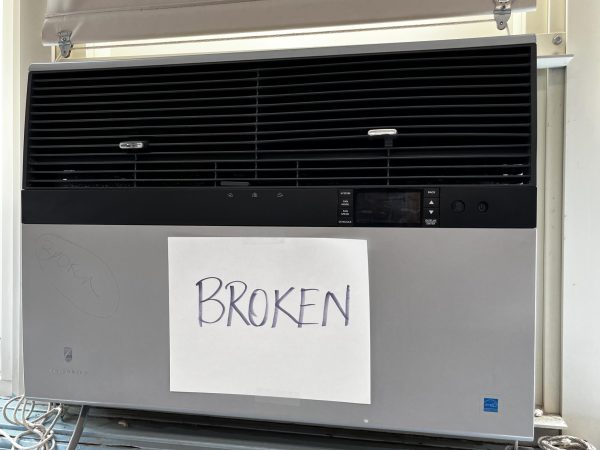
Across multiple floors, classroom conditions vary widely. Some rooms have several working air conditioners, while others rely on only one, and in some cases, units do not work at all. Observations conducted throughout the building showed a clear pattern: while many classrooms had functioning units, a noticeable number had at least one that was broken, malfunctioning, or in need of maintenance. In some cases, units would turn on but fail to cool the room effectively, while others stopped working during the day, causing heat to build up.
One of the most common concerns among teachers is noise. In several classrooms, older air conditioning units were described as disruptive to instruction, forcing teachers to choose between comfort and communication.
“There are two old air conditioners in the classroom… they cool the room, but they are disruptively loud and have to be turned off,” one teacher said. Another added, “When we need to all hear each other, we turn them off. Unless we are doing individual classwork, we turn them on.” Even newer systems are not always effective, with one teacher noting, “It is working properly, but it’s super loud. Nothing can be heard when it’s turned on.”
Mr. Anderson, a history teacher, described similar challenges across multiple classrooms, explaining that noise and performance issues often occur at the same time.
“There are four ACs, and only three of them turn on… they’re very loud, and they don’t do much,” Anderson said. He explained that this becomes a problem during discussions and presentations, where communication is key. “Students already talk low, and now they have to speak over the AC,” he said.
According to Anderson, temperature also plays a role in student focus. “You make it hot… and students start dozing off. Even the most engaged students lose focus because of the heat,” he said, while also noting that some students near the units can become too cold, creating an uneven experience within the same classroom.
While some teachers reported ongoing issues, others described more stable conditions. Mr. Yanez, who teaches AP Calculus, said his classroom has generally been consistent. “Generally pretty good… when it got hot, we asked to have the ACs turned on, and they got turned on quickly,” Yanez said. However, he acknowledged that temperature still affects students, adding that “when it got hot, it was clear students had a harder time participating.”
Concerns are not limited to classrooms. In the teacher’s lounge, staff reported that the air conditioning unit was not functioning properly, making the space uncomfortable during warmer days. “It’s not really blowing cool air… ” It’s not any better than opening a window,” said Mr. Pena, an English teacher. He described the environment as “uncomfortably hot” and “sticky,” especially after coming in from outside. According to Pena, the issue is known among staff, as “other teachers have said it’s not working,” showing that this has impacted more than one teacher.
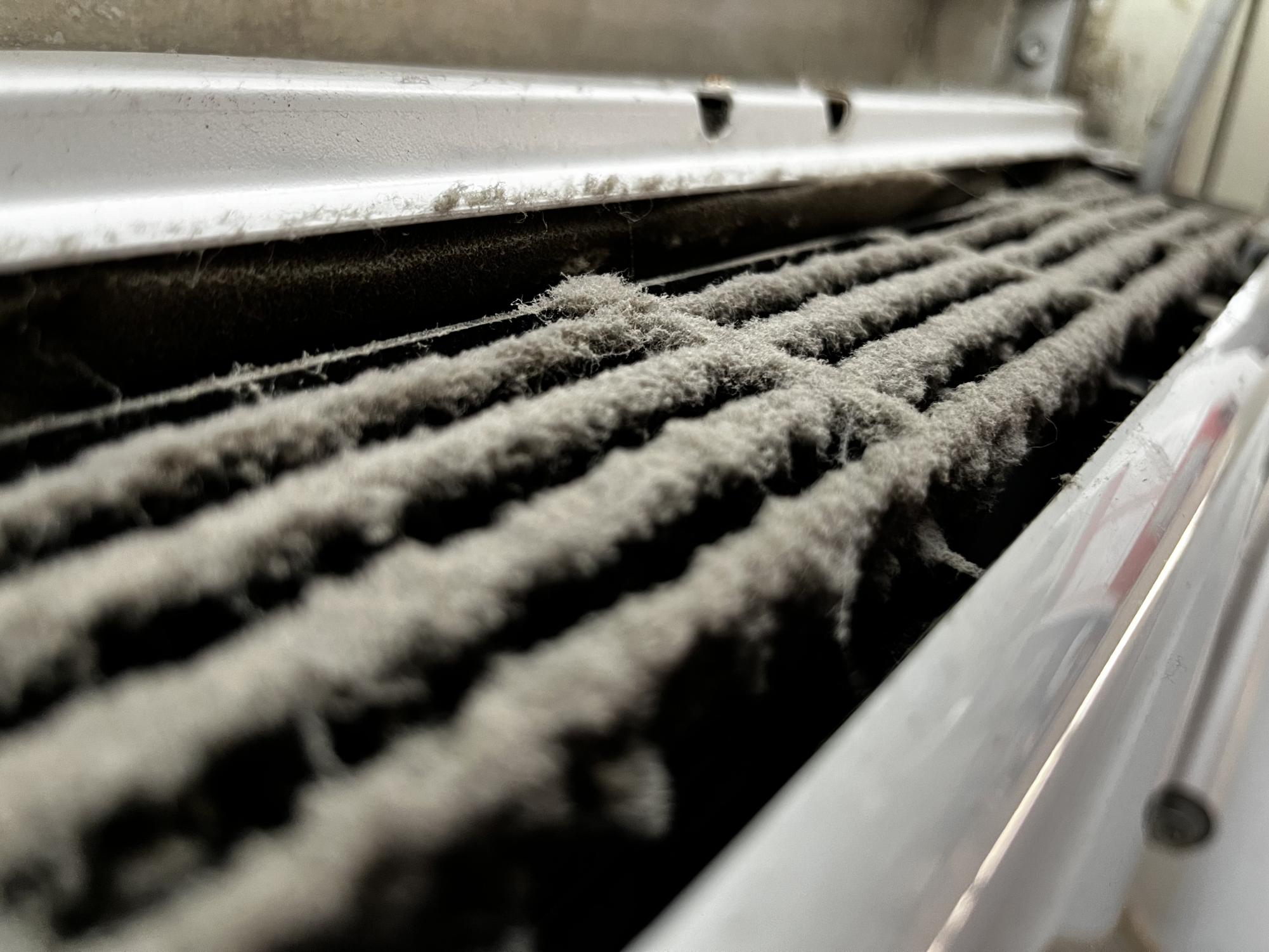
Maintenance issues go beyond temperature and noise. In the lounge, teachers reported hearing birds inside the air conditioning unit during warmer months, raising concerns about upkeep. “You can hear them chirping and moving around… ” It’s something we hear every year,” Pena said. Throughout the building, several units displayed “filter check” warnings, while others appeared dusty or produced humid air when running.
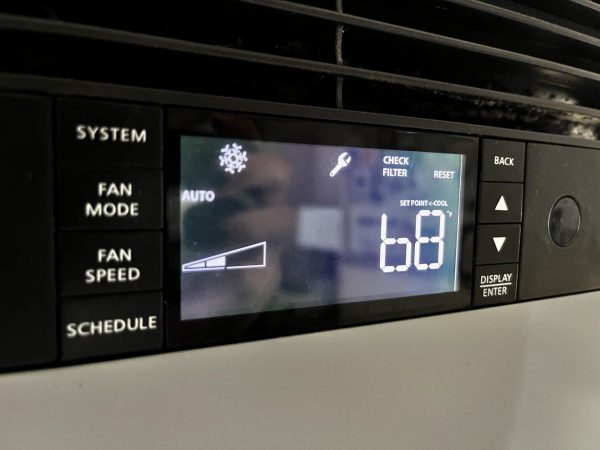
One teacher noted, “They both work, but the filters need to be cleaned. The air feels very damp and humid.” In some classrooms, teachers also reported that units struggled to cool the room when it was full of students, indicating that both maintenance and capacity have their contributions to how effective an AC Unit is.
Another issue found was the uneven distribution of air conditioning units. Some smaller classrooms were filled with multiple units, while larger rooms had fewer, raising questions about what determines the number of units put in a classroom. Although some classrooms have benefited from newer installations, others continue to rely on older systems that are louder and less efficient.
Despite these concerns, some teachers acknowledged that Edison is still better equipped than other schools.
“This building has more air conditioners than most schools I’ve seen,” Anderson said. However, he emphasized that improvements are still needed, particularly when it comes to noise and maintenance. “I wish they were quieter… and I wish the filters were cleaned more often,” he added.
The school doesn’t have regulated temperature throughout all the classes because of broken units, too much noise, lack of maintenance, inconsistent cooling, and even the location of the classroom in the building. As the weather gets hotter, students and teachers have to find a balance between comfort and focus in classrooms where conditions aren’t always reliable.