

Students voiced their struggles and shared meaningful messages through poetry, creating an emotional impact on the audience. Whether speaking on personal experiences or sensitive topics, the performers used their poems to express their opinions, emotions, and truths in a powerful way.
At this year’s annual Poetry Slam event, many students from Ms. Gray’s creative writing class took to the stage to address issues ranging from social injustice, mental health, and violence within our community. Through spoken word performances, these poets turned personal experiences and thoughts into powerful messages. This event gave the opportunity for students from our school community to have their voices heard.
“The purpose of the Poetry Slam is to have a forum where students get to voice how they feel about various current events, social justice issues, and just generally things that they’re passionate about,” creative writing teacher, Ms. Gray, said.
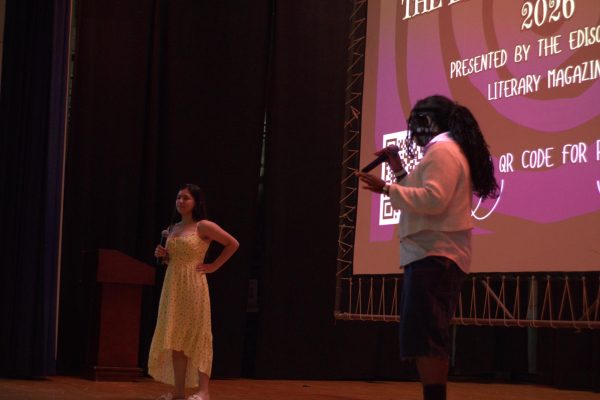
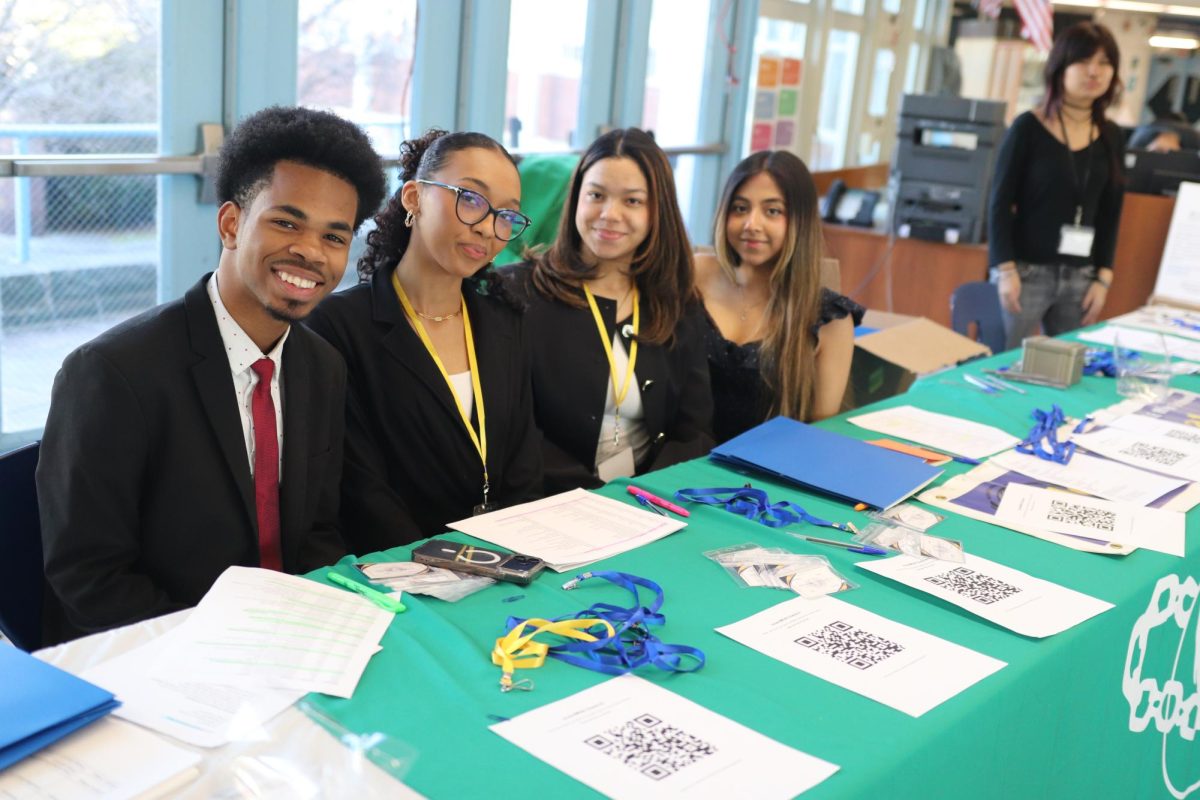
This event is run by our school’s creative Writing class, in which they also are in charge of The Edison Spark Magazine. The magazine is fully student led and features students taking leadership roles, including their Editors-in-chief.
“Well, the editor-in-chief essentially guides the direction within the magazine, the class, all events that go on within the creative writing class,” one of the Editors-in-chief, Justin Smiley Carter, said.
Their role in the classroom was just as important for leading and organizing the Poetry Slam.
“It was making sure that everyone was okay with their performances, that everyone was taking on a role that was proactive and just doing what they needed to do,” the other Editor-in-chief, Elissa Canas, said.
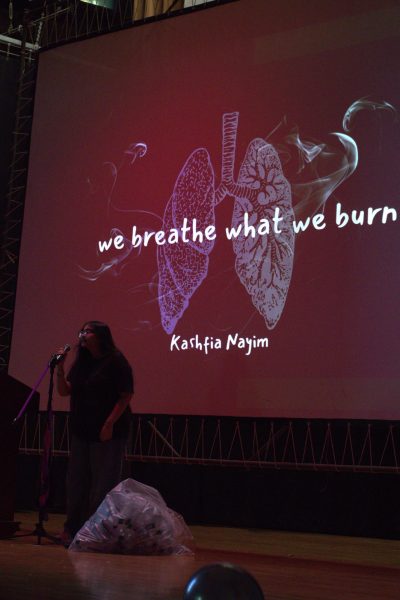
One of the first performances was “We Breathe What We Burn.” This student spoke of humanity’s harsh impact on our planet. They remind us of how consumerism destroys our plant by the day and this impact will affect our future generations permanently.
Concerns of gun violence emerged as a recurring theme throughout many performances. One poet questions whether simply existing in public spaces is safe, questioning whether people can be certain they will make it home each day and expresses discontentment of this idea.
The final performance before intermission focused on the impact of war, violence, and prejudice on children. The poets contrasted the carefree childhood experiences of some children to other kids who have to face the harsh realities of war and death. They compared a kids game of hide and seek to other kids having to hide from a bullet instead of a person, which in itself speaks many levels.